
Equipment
SHINING 3D Intraoral Scanners Compared: Elite Wireless, Elite, Elf and Aoralscan 3
Oct
Choosing an intraoral scanner is one of the biggest decisions in a digital practice. It shapes how fast you take impressions, how comfortable patients feel, how clean your data reaches the lab and which treatments you can offer. SHINING 3D intraoral scanners have become a popular choice in the United States because they combine strong accuracy with open data and no mandatory software subscription.
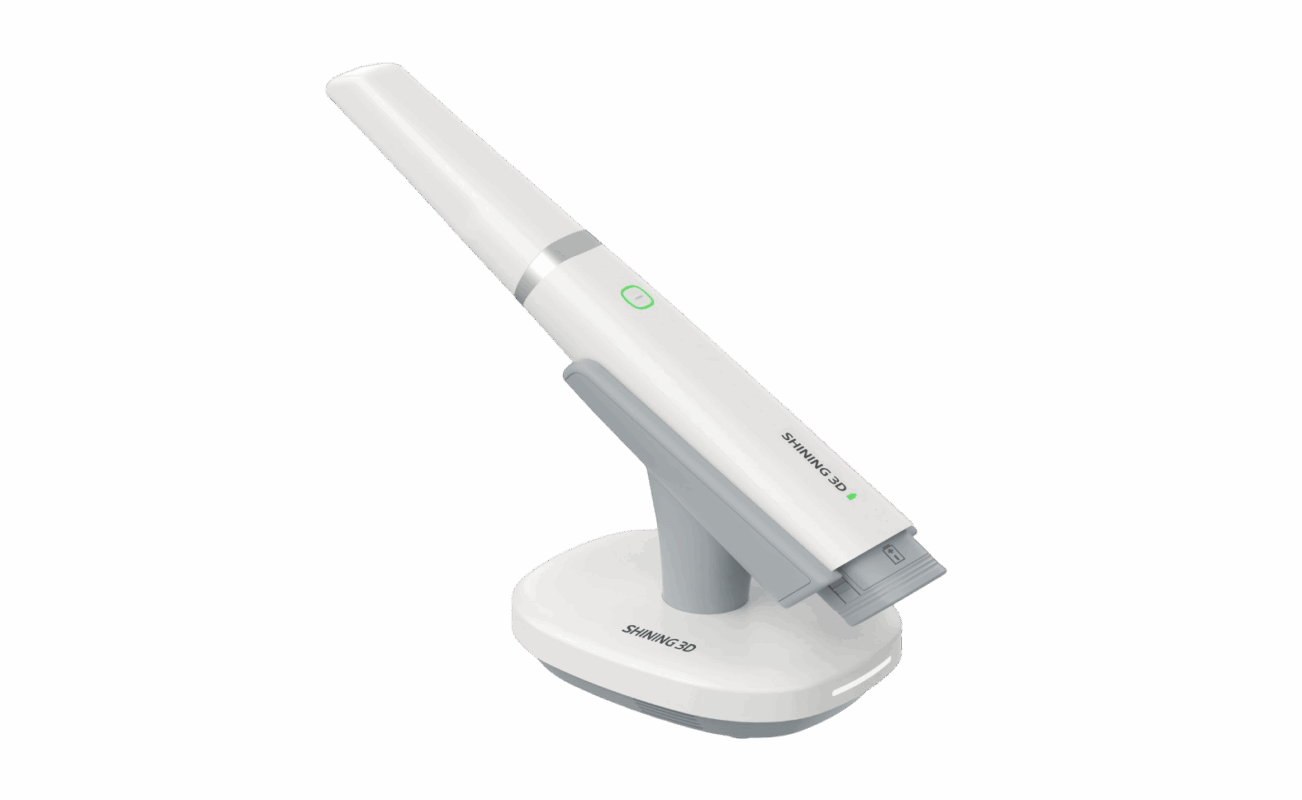
Articon now carries four SHINING 3D models: the Aoralscan Elite Wireless, the Aoralscan Elite, the Aoralscan Elf and the Aoralscan 3. They share the same core software and export open STL, OBJ and PLY files, but they are built for different needs and budgets. Two of them include intraoral photogrammetry (IPG) for full-arch implant work. One is wireless. One is the lightest scanner in the line. One is the proven workhorse of the previous generation.
In this guide we look at each scanner in detail, compare their specifications side by side and explain which model fits which type of practice.
Two Platforms, Four Scanners
Before looking at each model, it helps to understand that SHINING 3D intraoral scanners belong to two generations:
- The Elite platform (Elite Wireless, Elite and Elf) is the current generation, with newer optics, lighter handpieces, USB-C or wireless connection and shared scan tips.
- The Aoralscan 3 platform is the previous generation. It remains a reliable and widely used scanner, but its tips and accessories are not interchangeable with the Elite family.
The second key difference is IPG (intraoral photogrammetry). IPG combines a standard intraoral scan with photogrammetry, a method that measures the exact position of implants using coded scan bodies. It is designed for edentulous and All-on-X cases, where a regular scan of several implants across a full arch is hard to stitch accurately. Only the Elite and Elite Wireless include IPG.
Aoralscan Elite Wireless: The Flagship with IPG and No Cable
The Aoralscan Elite Wireless is the top model among SHINING 3D intraoral scanners. SHINING 3D describes it as the first wireless intraoral scanner with built-in intraoral photogrammetry. It takes everything the wired Elite does and removes the cable.
Design and Handling
With the battery installed, the scanner weighs about 194 g, which makes it one of the lightest wireless scanners on the market. The body is made of polymer instead of the metal used on the wired Elite. The weight is balanced, so the handpiece does not feel back-heavy during long full-arch scans. Without a cable pulling on the wrist, the doctor can move freely around the patient and change hand positions easily.
Wireless Performance and Battery
The scanner connects over Wi-Fi 6. It comes with two batteries and a charging case. According to SHINING 3D, each battery gives up to about 2 hours of continuous scanning and takes about 2.5 hours to charge fully, so one battery can charge while the other is in use. The scanner goes into sleep mode when idle and turns off automatically after an extended period.
A practical feature for multi-chair offices is place-connect: if you have cradles in several operatories, you can place the scanner in a cradle at another chair and it pairs and is ready to use.
IPG for Full-Arch Implant Cases
IPG is the main reason to choose the Elite Wireless. It uses a larger IPG tip (19 × 14 mm) and coded scan bodies to record the position of multiple implants in edentulous cases. This helps clinicians capture accurate full-arch implant data in the same session as the soft tissue scan, without a separate extraoral photogrammetry device. Depending on the kit, cap scan bodies are also offered for immediate loading cases.
Scan Tips and Hygiene
Three tip sizes are available: the IPG (big) tip for edentulous cases, the standard tip (16 × 12 mm) for adults and the mini tip (12 × 9 mm) for children or tight areas. The tips are interchangeable with the wired Aoralscan Elite and can be autoclaved up to 100 times. Scan depth is up to 22 mm from the tip window, which helps with scan bodies and deep subgingival margins.
Best For
- Implant-focused and surgical practices doing All-on-X and full-arch work
- Multi-chair offices that want one scanner moving between rooms
- Clinicians who scan many full arches a day and value freedom of movement
Things to Consider
The Elite Wireless is the most expensive model in the line. Batteries need to be managed through the day, and like the other Elite models it requires regular calibration. If you do not need IPG, a lighter and more affordable model may be the better investment.
Aoralscan Elite: IPG Accuracy in a Wired, Ultra-Light Body
The Aoralscan Elite was the scanner that introduced intraoral photogrammetry to the market. SHINING 3D presents it as the first device to combine intraoral scanning and photogrammetry in a single unit. In 2024 it was named IOS of the Year by the Digital Dentistry Society.
Two Scanners in One
The Elite works as a standard intraoral scanner for dentate patients: crowns, bridges, inlays, orthodontic records and everyday restorative cases. Switch to the IPG tip and it becomes a photogrammetry system for edentulous implant cases. It records the position of multi-unit abutment scan bodies quickly and registers them to the soft tissue and bite. For clinics that place and restore full-arch implants, this removes the need to buy a separate photogrammetry system.
Design and Build
The wired Elite weighs only about 124 g without the cable and measures about 245 × 30 × 26 mm. Its body is metal, which gives it a solid, premium feel. It connects with a single USB-C cable, so setup is simple and there is no external power box.
Scan Tips and Scanning Range
The Elite uses the same three tips as the Elite Wireless: the IPG tip (19 × 14 mm), the standard tip (16 × 12 mm) and the mini tip (12 × 9 mm). The scan depth reaches 22 mm from the tip exit surface. Tips can be autoclaved up to 100 times, and an auto anti-fog function keeps the view clear during scanning.
Best For
- Implant and prosthodontic practices that want IPG at a lower cost than the wireless version
- Clinics that work at one main chair and prefer the reliability of a cable connection
- Doctors who want the lightest IPG scanner in the handpiece
Things to Consider
The cable limits movement slightly compared with the wireless model. If your practice rarely treats edentulous implant cases, the IPG function may go unused, and the Aoralscan Elf delivers very similar everyday scanning for less.
Aoralscan Elf: Elite Performance at the Lightest Weight
The Aoralscan Elf is the newest and most accessible model of the Elite platform. In simple terms, it brings the Elite’s everyday scanning performance and software into a lighter, more affordable scanner, without the IPG photogrammetry function.
The Lightest Scanner in the Line
At about 106 g without the cable, the Elf is the lightest of all SHINING 3D intraoral scanners and one of the lightest intraoral scanners available today. It measures about 245.5 × 27 × 30.5 mm and has a slim, pen-like shape. For doctors who scan many patients a day, this low weight reduces hand and wrist fatigue. The body is made of plastic rather than metal, which keeps both weight and cost down.
Simple Plug-and-Play Setup
The Elf connects with a single USB-C cable. There is no separate power adapter or power box, so it is easy to move between computers or operatories and quick to set up. It comes with a classic scanner cradle.
Three Tip Sizes
The Elf supports a big tip (19 × 14 mm), a standard tip (16 × 12 mm) and a mini tip (12 × 9 mm). The big tip speeds up full-arch scanning, the standard tip covers routine adult cases, and the mini tip helps with children and posterior areas where space is limited.
Smart Software Features
The Elf includes the full SHINING 3D software suite. Highlights include IntelliBite, an AI-assisted bite analysis tool, and plaque scanning and analysis, which helps visualize plaque for patient education. True-color, powder-free scanning captures teeth, gingiva and soft tissue in color, which makes the 3D model easy to show to patients chairside.
Best For
- General dentists starting or upgrading their digital workflow
- Restorative, orthodontic and preventive practices that do not need full-arch IPG
- Offices that want a second or third scanner for additional operatories
- Practices focused on patient communication and case acceptance
Things to Consider
The Elf does not support the IPG workflow or the coded scan body kit. Standard implant cases with conventional scan bodies can still be scanned, but practices planning to do many full-arch implant cases should look at the Elite or Elite Wireless.
Aoralscan 3: The Proven Everyday Workhorse
The Aoralscan 3 is the scanner that made SHINING 3D a familiar name in many practices. It won an iF Design Award in 2022 and is still used widely for routine digital dentistry. While it belongs to the previous generation, it remains a reliable, practical choice for clinics that want solid everyday performance.
Scanning Performance
The Aoralscan 3 uses non-contact structured light scanning. When it launched, SHINING 3D reported about 30% faster scanning and about 30% higher accuracy than the previous generation. Its scan depth of up to 22 mm makes it suitable for scan bodies and periodontal scans, and it handles everything from single-tooth preparations to edentulous arches.
Design and Ergonomics
The scanner weighs about 240 g without cables and measures about 281 × 33 × 46 mm. It has one-button control, a dynamic LED indicator and automatic anti-fogging. It is heavier than the Elite family, but its shape is ergonomic and familiar to many clinicians.
Scan Tips and Package
The Aoralscan 3 uses a standard tip (16 × 12 mm) and a mini tip (12 × 9 mm). The package typically includes four standard tips for adults, one small tip for children and a calibrator. Note that Aoralscan 3 tips are not compatible with the Elite, Elite Wireless or Elf.
Connection and Software
The scanner connects via USB 3.0 and uses an external power adapter. It runs the same SHINING 3D scanning software family as the newer models, with communication tools that help explain treatment to patients and send cases to the lab.
Best For
- Practices that want a dependable scanner for crowns, bridges, orthodontics and prosthodontics
- Clinics adding a scanner to an extra operatory on a budget
- Teams already familiar with the Aoralscan 3 who want a consistent workflow across rooms
Things to Consider
The Aoralscan 3 is heavier than the Elite platform scanners, needs a power adapter and does not support IPG. For a new purchase, compare it with the Aoralscan Elf, which offers current-generation technology in a much lighter body.
SHINING 3D Intraoral Scanners Side by Side
| Feature | Aoralscan Elite Wireless | Aoralscan Elite | Aoralscan Elf | Aoralscan 3 |
|---|---|---|---|---|
| Platform | Elite (current) | Elite (current) | Elite (current) | Aoralscan 3 (previous) |
| Connection | Wireless, Wi-Fi 6 | Wired, USB-C | Wired, single USB-C | Wired, USB 3.0 + power adapter |
| Weight | about 194 g with battery | about 124 g without cable | about 106 g without cable | about 240 g without cables |
| Size (L × W × H) | about 247 × 38 × 37 mm | about 245 × 30 × 26 mm | about 245.5 × 27 × 30.5 mm | about 281 × 33 × 46 mm |
| IPG photogrammetry | Yes | Yes | No | No |
| Tips | IPG, standard, mini | IPG, standard, mini | Big, standard, mini | Standard, mini |
| Largest scan field | 19 × 14 mm | 19 × 14 mm | 19 × 14 mm | 16 × 12 mm |
| Scan depth | up to 22 mm | up to 22 mm | up to 22 mm | up to 22 mm |
| Battery | 2 batteries, about 2 h scanning each | Not needed | Not needed | Not needed |
| Output files | STL, OBJ, PLY | STL, OBJ, PLY | STL, OBJ, PLY | STL, OBJ, PLY |
| Best for | Full-arch implants, multi-chair offices | Full-arch implants at one chair | Everyday dentistry, best value | Routine work on a budget |
Specifications are published by SHINING 3D and may change with new hardware or software versions.
What the Numbers Mean in Practice
Weight. The difference between 106 g and 240 g is easy to feel after a full day of scanning. A lighter scanner reduces strain and makes it easier to reach posterior areas, especially for doctors with smaller hands.
Connection. Wireless means freedom of movement and fewer cables on the operatory floor, but also battery management. A single USB-C cable, as on the Elite and Elf, is the simplest wired setup. The Aoralscan 3 needs both a USB connection and an external power adapter.
IPG. If full-arch implant restorations are a growing part of your practice, IPG can save time, reduce remakes and replace a separate photogrammetry device. If not, you are paying for a feature you will rarely use.
Tip compatibility. If you already own an Elite family scanner, adding another Elite family model keeps your tip inventory and sterilization routine simple.
Which SHINING 3D Scanner Fits Your Practice?
There is no single “best” scanner. The right choice depends on the treatments you offer, how many chairs you run and how much you want to invest. Here is a simple way to decide.
Choose the Aoralscan Elite Wireless if…
You place and restore full-arch implants regularly, you run several operatories and you want one premium scanner that moves freely between them. You get IPG, the full Elite scanning performance and complete freedom from cables. This is the model for implant centers, prosthodontists and busy surgical practices that want the most capable tool in the line.
Choose the Aoralscan Elite if…
You want IPG for All-on-X and edentulous cases but mostly scan at one chair. You get the same photogrammetry capability as the wireless model in a lighter, wired handpiece and at a lower price. It is a strong choice for oral surgeons and restorative dentists growing their implant work.
Choose the Aoralscan Elf if…
Your work is mainly crowns, bridges, inlays, onlays, orthodontic records, night guards and patient education. You want current-generation scanning, the lightest handpiece available and the full software suite without paying for IPG. For most general practices, the Elf offers the best balance of performance and cost. It is also an excellent second scanner for practices that already own an Elite.
Choose the Aoralscan 3 if…
You want a proven, reliable scanner for routine restorative and orthodontic work, or your team already uses the Aoralscan 3 and you want the same workflow in an additional room. It covers the essentials of digital impressions well, as long as weight and IPG are not priorities.
A Quick Decision Guide
| Your priority | Best match |
|---|---|
| Full-arch implants + freedom of movement | Aoralscan Elite Wireless |
| Full-arch implants at a lower investment | Aoralscan Elite |
| Everyday dentistry with the best value | Aoralscan Elf |
| Lightest handpiece | Aoralscan Elf |
| Familiar workflow for an extra room | Aoralscan 3 |
| Multi-chair office with one shared scanner | Aoralscan Elite Wireless |
What All Four Have in Common
Whichever model you choose, you get open STL, OBJ and PLY export, which means your scans work with Exocad, 3Shape and most other CAD software as well as with your lab’s workflow. All four are powder-free and capture true-color 3D images. SHINING 3D also offers its scanning software without a mandatory annual subscription, which lowers the long-term cost of ownership. Confirm the current software and warranty terms with our team before you buy.
FAQ: SHINING 3D Intraoral Scanners
What is the difference between the Aoralscan Elite and the Aoralscan Elf?
The Elf is built on the Elite platform and offers very similar everyday scanning, but it does not include IPG photogrammetry. It is also lighter (about 106 g vs about 124 g), uses a plastic body instead of metal and costs less.
What is IPG and do I need it?
IPG, or intraoral photogrammetry, measures the precise position of multiple implants using coded scan bodies. It is designed for edentulous and full-arch implant cases such as All-on-X. If you rarely do this type of work, a scanner without IPG, like the Elf, is usually enough.
Is the Aoralscan Elite Wireless the same as the Elite?
It offers the same IPG capability and uses the same scan tips, but it connects over Wi-Fi 6 and runs on batteries. It is heavier (about 194 g with battery) and has a polymer body instead of metal.
How long does the Elite Wireless battery last?
According to SHINING 3D, each battery provides up to about 2 hours of continuous scanning and takes about 2.5 hours to charge. Two batteries are included, so one can charge while the other is in use.
Are scan tips interchangeable between models?
The Elite and Elite Wireless share the same tips. Aoralscan 3 tips are not compatible with the Elite family. Tips can be autoclaved up to 100 times.
Do SHINING 3D scanners work with Exocad and other CAD software?
Yes. All four models export open STL, OBJ and PLY files that can be used in Exocad, 3Shape and most other CAD platforms, or sent directly to a dental lab.
Is there a monthly or yearly software subscription?
SHINING 3D offers its scanning software without a mandatory annual subscription. Some advanced modules or services may be sold separately, so ask our team about the current terms for each model.
Which SHINING 3D intraoral scanner is best for a general dental practice?
For most general practices, the Aoralscan Elf is the strongest value. Practices with significant full-arch implant work should consider the Elite or Elite Wireless.
Find Your SHINING 3D Scanner at Articon
Each of these SHINING 3D intraoral scanners solves a different problem. The Elite Wireless gives you IPG with total freedom of movement, the Elite brings IPG in a light wired body, the Elf delivers current-generation scanning at the best value, and the Aoralscan 3 remains a dependable choice for routine work. Our team can help you compare them for your specific cases, arrange a demo and plan training for your staff.
🛒 Ready to choose your scanner? Explore all SHINING 3D intraoral scanners at Articon, request a quote or call us at (800) 316-8085.